
Namakkal Egg Rate Today
Updated 30th August 2026 · Source: NECC Namakkal
Today’s Rate
₹5.20 /piece
Tray Price
₹156.00 (30 Eggs)
Retail Price
₹5.82
Supermarket Rate
₹5.72
The latest Namakkal egg rate for 30th August 2026 is ₹5.20 per egg based on NECC market data. Today’s tray price is ₹156.00, while 100 eggs costing ₹520.00 and 1 peti priced at ₹1,092.00. Retail and supermarket prices currently stand at ₹5.82 and ₹5.72. Check the updated Namakkal egg price table below to see the summary and rates trend.
PRICE TREND
Namakkal Egg Rate Summary and Trend
Follow recent changes in Namakkal egg prices through a monthly summary and interactive price chart. View the highest, lowest, and average rates to understand how the local market has performed over recent days.
Highest
₹5.70 on 2 Aug
Lowest
₹5.20 on 30 Aug
Average
₹5.36 So far this month
FULL BREAKDOWN
Namakkal Egg rates (last 30 days)
Browse Namakkal egg prices from the last 30 days, including rates per egg, tray, 100 eggs, and peti. Compare daily price movements and review recent market trends in one place.
| Date | Piece (₹) | Tray/30 (₹) | 100 Pcs (₹) | Peti/210 (₹) |
|---|---|---|---|---|
| 30 Aug 2026 | ₹5.20 | ₹156.00 | ₹520.00 | ₹1,092.00 |
| 29 Aug 2026 | ₹5.20 | ₹156.00 | ₹520.00 | ₹1,092.00 |
| 28 Aug 2026 | ₹5.20 | ₹156.00 | ₹520.00 | ₹1,092.00 |
| 27 Aug 2026 | ₹5.20 | ₹156.00 | ₹520.00 | ₹1,092.00 |
| 26 Aug 2026 | ₹5.20 | ₹156.00 | ₹520.00 | ₹1,092.00 |
| 25 Aug 2026 | ₹5.20 | ₹156.00 | ₹520.00 | ₹1,092.00 |
| 24 Aug 2026 | ₹5.20 | ₹156.00 | ₹520.00 | ₹1,092.00 |
| 23 Aug 2026 | ₹5.20 | ₹156.00 | ₹520.00 | ₹1,092.00 |
| 22 Aug 2026 | ₹5.20 | ₹156.00 | ₹520.00 | ₹1,092.00 |
| 21 Aug 2026 | ₹5.40 | ₹162.00 | ₹540.00 | ₹1,134.00 |
| 20 Aug 2026 | ₹5.40 | ₹162.00 | ₹540.00 | ₹1,134.00 |
| 19 Aug 2026 | ₹5.40 | ₹162.00 | ₹540.00 | ₹1,134.00 |
| 18 Aug 2026 | ₹5.40 | ₹162.00 | ₹540.00 | ₹1,134.00 |
| 17 Aug 2026 | ₹5.40 | ₹162.00 | ₹540.00 | ₹1,134.00 |
| 16 Aug 2026 | ₹5.40 | ₹162.00 | ₹540.00 | ₹1,134.00 |
| 15 Aug 2026 | ₹5.40 | ₹162.00 | ₹540.00 | ₹1,134.00 |
| 14 Aug 2026 | ₹5.40 | ₹162.00 | ₹540.00 | ₹1,134.00 |
| 13 Aug 2026 | ₹5.40 | ₹162.00 | ₹540.00 | ₹1,134.00 |
| 12 Aug 2026 | ₹5.40 | ₹162.00 | ₹540.00 | ₹1,134.00 |
| 11 Aug 2026 | ₹5.40 | ₹162.00 | ₹540.00 | ₹1,134.00 |
| 10 Aug 2026 | ₹5.40 | ₹162.00 | ₹540.00 | ₹1,134.00 |
| 09 Aug 2026 | ₹5.40 | ₹162.00 | ₹540.00 | ₹1,134.00 |
| 08 Aug 2026 | ₹5.40 | ₹162.00 | ₹540.00 | ₹1,134.00 |
| 07 Aug 2026 | ₹5.40 | ₹162.00 | ₹540.00 | ₹1,134.00 |
| 06 Aug 2026 | ₹5.40 | ₹162.00 | ₹540.00 | ₹1,134.00 |
| 05 Aug 2026 | ₹5.40 | ₹162.00 | ₹540.00 | ₹1,134.00 |
| 04 Aug 2026 | ₹5.40 | ₹162.00 | ₹540.00 | ₹1,134.00 |
| 03 Aug 2026 | ₹5.40 | ₹162.00 | ₹540.00 | ₹1,134.00 |
| 02 Aug 2026 | ₹5.70 | ₹171.00 | ₹570.00 | ₹1,197.00 |
| 01 Aug 2026 | ₹5.70 | ₹171.00 | ₹570.00 | ₹1,197.00 |
About Namakkal Egg Market
Namakkal is a district in Tamil Nadu that has grown into one of India’s most important commercial egg production centers. The Namakkal egg rate today is watched closely not just within Tamil Nadu but by egg traders, wholesalers, and distributors across multiple states.
What makes Namakkal stand out is the sheer concentration of layer farms in and around the district. Unlike most cities that consume eggs produced elsewhere, Namakkal is a producer. Millions of layer hens housed on commercial farms here generate eggs that are distributed across South, West, and North India every single day.
NECC classifies Namakkal as a Production Centre (PC), which means the price published here is a farm-gate rate, not the landed cost after transport. This is why the Namakkal egg price is typically lower than the rates you see in consuming cities like Delhi, Mumbai, or Hyderabad.
Poultry farmers, egg traders, wholesalers, and large-scale buyers monitor Namakkal rates every morning because movement here often signals what will happen to prices in markets across South India within 24 to 48 hours.
Namakkal is not just a local market. It is a pricing reference point for the southern egg trade. When the Namakkal rate moves, traders in Chennai, Bengaluru, Kochi, and Hyderabad take notice immediately.
Why Namakkal is Known as the Egg City of India
Namakkal did not earn this title from a government declaration. It came from decades of consistent commercial poultry farming that turned a mid-sized Tamil Nadu district into one of the country’s most recognized egg supply centers.
The transformation began in the 1970s and 1980s when farmers in Namakkal started moving from traditional agriculture to commercial layer farming. The region’s climate, relatively easy access to poultry feed ingredients, and strong local entrepreneurship created conditions that allowed the poultry industry to grow at scale in a way few other districts in India matched.
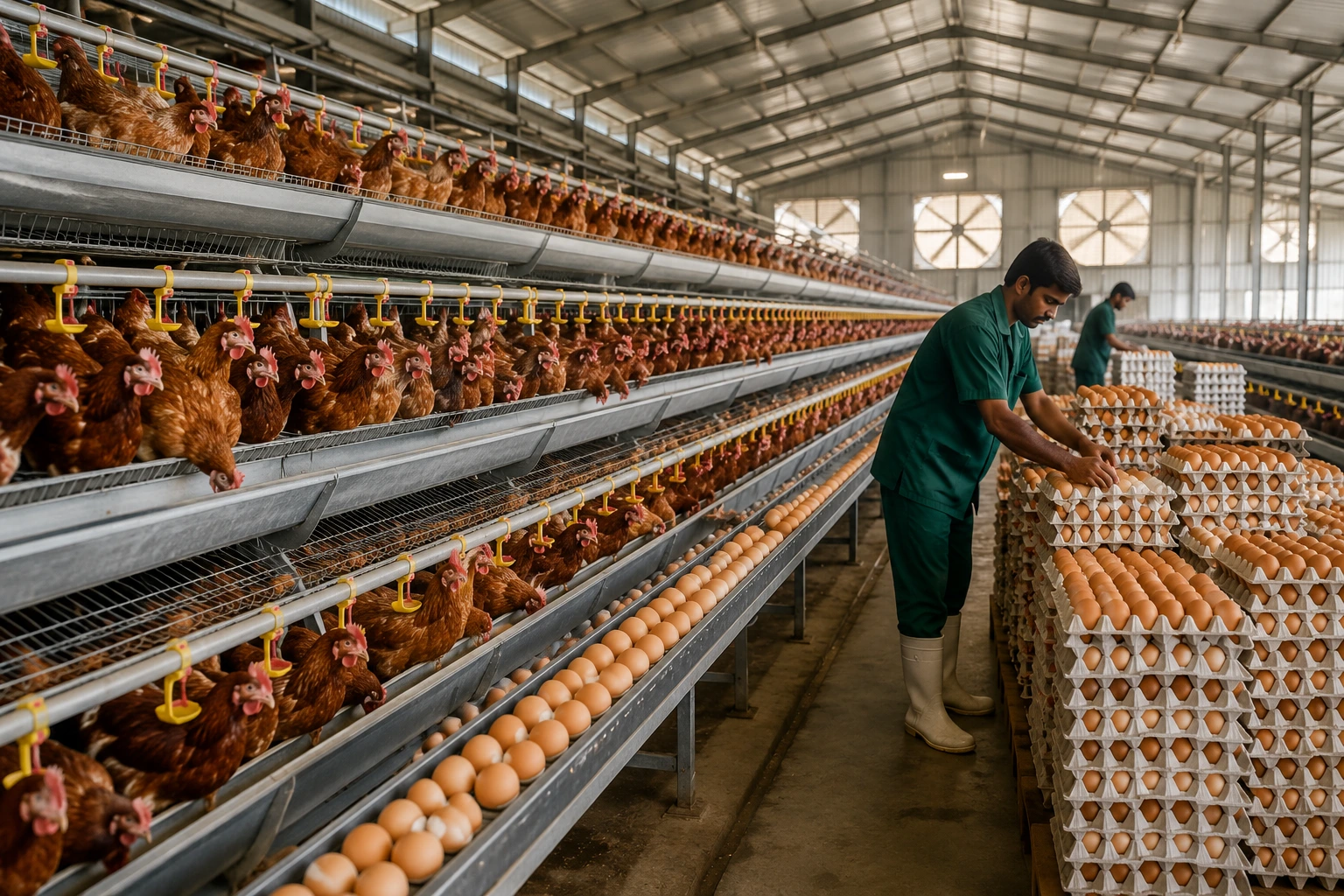
Here is what makes Namakkal different from most other egg-producing areas in India:
- High concentration of large layer farms Farms in Namakkal are not small backyard operations. Many run tens of thousands of birds at a time, with modern caging systems, automated feeding, and controlled environments that support consistent year-round production.
- Vertically integrated supply chain Many Namakkal poultry businesses handle everything from chick procurement and feed sourcing to egg grading, packing, and distribution. This reduces costs and gives them better control over quality and pricing.
- Strong trader and wholesaler network Over decades, a well-developed network of egg traders, commission agents, and distributors has formed around Namakkal. This network can move large egg volumes quickly to markets across multiple states.
- NECC representation Namakkal is one of the key markets where NECC collects production data and price feedback to inform its daily rate-setting process. The district’s output is significant enough to influence the national price reference.
- Institutional recognition Agricultural universities, poultry research institutions, and government agencies regularly reference Namakkal as a benchmark for commercial egg production in India.
Namakkal’s reputation was not built on one large company or a government initiative. It was built by thousands of poultry farming families who built commercial operations over multiple generations, making the district one of the strongest private-sector poultry clusters in Asia.
How Egg Price Fluctuations Affect Namakkal’s Poultry Industry
Because Namakkal is a production center, price movements here affect every link in the local poultry chain. A ₹0.50 change per egg sounds small, but multiplied across lakhs of eggs produced daily, the financial impact on farmers, traders, and retailers is significant.
- Profit margins: Feed costs stay fixed regardless of the egg rate. When prices fall below the cost of production, farmers operate at a loss. Even a ₹0.30 drop per egg can erase the day’s margin entirely at high production volumes.
- Production planning: During prolonged low-rate periods, some farmers reduce flock sizes or delay adding new birds. This reduces future supply, which eventually pushes prices back up.
- Feed costs: Maize and soybean meal make up the bulk of layer feed costs. When feed prices rise alongside a rate drop, the squeeze on farmers is much worse than a simple price chart shows.
- Buying decisions: Traders watch the daily Namakkal egg rate closely before deciding how much to buy. A rising rate signals increasing demand or tightening supply; traders move quickly to lock in stock before prices climb further.
- Bulk purchases: In a falling market, experienced traders often hold back on large purchases and wait for the rate to stabilize. Buying into a falling market can result in selling at a lower price than purchase cost.
- Inventory management: Eggs cannot be stored for long. Traders holding large volumes when the rate drops have limited options. Managing daily inventory based on rate direction is a core skill in this business.
- Retail pricing: Retailers in Namakkal and surrounding areas price their eggs based on the morning mandi rate. When the wholesale rate moves, retail prices typically follow within the same day or the next morning.
- Consumer demand: Tamil Nadu consumers are price-aware. A noticeable rate rise can reduce daily purchases or push buyers toward smaller quantity buying. A rate drop tends to increase volumes sold at retail level.
- Price adjustments: Small retailers with tight margins have very little room to absorb price swings. Most adjust their selling price the same morning to protect their daily income.
Namakkal’s Role in India’s Egg Supply Chain
Most egg production centers supply their nearby region. Namakkal is different. Its output is large enough and its logistics network established enough that eggs from this district reach markets in South, West, and even North India on a regular basis.
| Region | Key Markets Supplied | Supply Relationship |
|---|---|---|
| South India | Chennai, Bengaluru, Kochi, Coimbatore | Primary supply corridor. Daily arrivals. Namakkal rate directly sets the benchmark. |
| West India | Mumbai, Pune, Surat | Regular supply, especially during periods of high demand when local production falls short. |
| North India | Delhi, Hyderabad (in part) | Supplementary supply. Namakkal eggs reach these markets when northern production centers face shortages. |
The relationship between Namakkal and NECC pricing is direct. Because Namakkal is a NECC Production Centre, the rates collected here feed into the NECC’s daily pricing model. When Namakkal production rises or falls significantly, it affects the national rate reference used by traders everywhere.
This is why a disease outbreak affecting Namakkal layer farms does not stay a local story. It moves egg rates in Chennai, Bengaluru, and sometimes Mumbai within days. Traders in those cities track the Namakkal egg rate not out of academic interest but because it tells them what their own purchase costs will look like tomorrow.
Namakkal is one of a small number of production centers whose output is large enough to influence national NECC pricing. Very few districts in India carry this kind of weight in the daily egg market.
Seasonal Trends Affecting Namakkal Egg Prices
Namakkal’s egg prices follow a seasonal pattern that is shaped by Tamil Nadu’s climate, India’s festival calendar, and the poultry industry’s cost structure. Understanding these trends helps farmers, traders, and buyers plan ahead instead of reacting to daily surprises.
Who Monitors Namakkal Egg Rates?
The daily Namakkal egg rate is followed by a wide range of industry participants, each with their own specific reason for checking it every morning.
Why Check Namakkal Egg Rates Daily?
For anyone involved in buying, selling, or distributing eggs, the Namakkal egg rate today is not just a number. It is a decision-making tool. Here is how checking it every morning makes a practical difference.
- 1Better purchasing decisionsKnowing the current wholesale rate before you buy prevents overpaying. If the rate has dropped from yesterday, you know your purchase cost is lower. If it has risen, you can decide whether to buy less today and wait for the market to stabilize.
- 2Wholesale planningWholesalers use the daily rate to set their own pricing to retailers and institutional buyers. A quick morning rate check means the day’s price list reflects the actual market, not yesterday’s stale number.
- 3Inventory managementBecause eggs are perishable, holding stock in a falling market is costly. Tracking the rate daily helps traders decide how much to buy, how much to hold, and when to move stock quickly before the price drops further.
- 4Market analysisWatching the Namakkal rate over a week or two reveals whether the market is in an upward trend, a downward trend, or holding steady. This context helps businesses plan purchases, set budgets, and negotiate supplier contracts with a clearer view of where prices are heading.
- 5Tracking price movementsThe monthly history table on this page shows exactly how the Namakkal egg rate has moved over the past 30 days. Comparing today’s rate against the monthly average, the monthly high, and the monthly low gives any buyer or seller an immediate sense of whether today is a good day to act or to wait.
This page is updated every morning with the latest NECC Namakkal egg rate, so you always have an accurate, current number before the market opens for the day.
Browse Popular City Egg Rates
Compare today’s egg prices across other major egg markets in India. Choose any city below to check its latest rates, price trends, and recent market history.
QUESTIONS