
West Bengal Egg Rate Today
Updated 30th August 2026 · Source: NECC West Bengal
Today’s Rate
₹6.30 /piece
Tray Price
₹189.00 (30 Eggs)
Retail Price
₹7.06
Supermarket Rate
₹6.93
As of 30th August 2026: Today’s west bengal egg rate is ₹6.30 per egg. A tray of 30 eggs costs ₹189.00, while 100 eggs are priced at ₹630.00 and 1 peti costs ₹1,323.00. The current retail and supermarket rates are ₹7.06 and ₹6.93. Check the updated West Bengal egg rate table below to see full rates of this month.
PRICE TREND
West Bengal Egg Rate Summary and Trend
Monitor how egg prices in West Bengal have moved over recent days with the summary and trend chart below. Review this month’s highest, lowest, and average prices, then use the interactive graph to follow recent market movements.
Highest
₹6.30 on 30 Aug
Lowest
₹5.75 on 14 Aug
Average
₹5.94 So far this month
FULL BREAKDOWN
West Bengal rates (Last 30 days)
View the last 30 days of West Bengal egg prices in one place. The table below lists daily rates per egg, tray, 100 eggs, and peti, making it easy to compare recent price changes and review historical market data.
| Date | Piece (₹) | Tray/30 (₹) | 100 Pcs (₹) | Peti/210 (₹) |
|---|---|---|---|---|
| 30 Aug 2026 | ₹6.30 | ₹189.00 | ₹630.00 | ₹1,323.00 |
| 29 Aug 2026 | ₹6.30 | ₹189.00 | ₹630.00 | ₹1,323.00 |
| 28 Aug 2026 | ₹6.20 | ₹186.00 | ₹620.00 | ₹1,302.00 |
| 27 Aug 2026 | ₹6.10 | ₹183.00 | ₹610.00 | ₹1,281.00 |
| 26 Aug 2026 | ₹6.05 | ₹181.50 | ₹605.00 | ₹1,270.50 |
| 25 Aug 2026 | ₹6.00 | ₹180.00 | ₹600.00 | ₹1,260.00 |
| 24 Aug 2026 | ₹5.90 | ₹177.00 | ₹590.00 | ₹1,239.00 |
| 23 Aug 2026 | ₹5.80 | ₹174.00 | ₹580.00 | ₹1,218.00 |
| 22 Aug 2026 | ₹5.80 | ₹174.00 | ₹580.00 | ₹1,218.00 |
| 21 Aug 2026 | ₹5.80 | ₹174.00 | ₹580.00 | ₹1,218.00 |
| 20 Aug 2026 | ₹5.80 | ₹174.00 | ₹580.00 | ₹1,218.00 |
| 19 Aug 2026 | ₹5.80 | ₹174.00 | ₹580.00 | ₹1,218.00 |
| 18 Aug 2026 | ₹5.80 | ₹174.00 | ₹580.00 | ₹1,218.00 |
| 17 Aug 2026 | ₹5.80 | ₹174.00 | ₹580.00 | ₹1,218.00 |
| 16 Aug 2026 | ₹5.80 | ₹174.00 | ₹580.00 | ₹1,218.00 |
| 15 Aug 2026 | ₹5.80 | ₹174.00 | ₹580.00 | ₹1,218.00 |
| 14 Aug 2026 | ₹5.75 | ₹172.50 | ₹575.00 | ₹1,207.50 |
| 13 Aug 2026 | ₹5.75 | ₹172.50 | ₹575.00 | ₹1,207.50 |
| 12 Aug 2026 | ₹5.75 | ₹172.50 | ₹575.00 | ₹1,207.50 |
| 11 Aug 2026 | ₹5.85 | ₹175.50 | ₹585.00 | ₹1,228.50 |
| 10 Aug 2026 | ₹5.80 | ₹174.00 | ₹580.00 | ₹1,218.00 |
| 09 Aug 2026 | ₹6.00 | ₹180.00 | ₹600.00 | ₹1,260.00 |
| 08 Aug 2026 | ₹6.00 | ₹180.00 | ₹600.00 | ₹1,260.00 |
| 07 Aug 2026 | ₹6.00 | ₹180.00 | ₹600.00 | ₹1,260.00 |
| 06 Aug 2026 | ₹6.00 | ₹180.00 | ₹600.00 | ₹1,260.00 |
| 05 Aug 2026 | ₹5.90 | ₹177.00 | ₹590.00 | ₹1,239.00 |
| 04 Aug 2026 | ₹5.90 | ₹177.00 | ₹590.00 | ₹1,239.00 |
| 03 Aug 2026 | ₹6.10 | ₹183.00 | ₹610.00 | ₹1,281.00 |
| 02 Aug 2026 | ₹6.10 | ₹183.00 | ₹610.00 | ₹1,281.00 |
| 01 Aug 2026 | ₹6.10 | ₹183.00 | ₹610.00 | ₹1,281.00 |
West Bengal Egg Market Overview
West Bengal sits at the centre of Eastern India’s egg market. The West Bengal egg rate is tracked daily by traders, retailers, and food businesses across the state, because the market here is large, commercially active, and sensitive to supply changes from both local farms and distant production states.
The state combines two distinct market roles. It is both a producing state, with layer farms spread across several districts, and a major consuming state, with Kolkata alone representing one of the largest egg consumption markets in Eastern India. This dual role makes West Bengal’s egg market more complex to understand than a pure producer or consumer state.
Consumer demand across West Bengal is strong and consistent. Bengali cuisine uses eggs regularly across all income levels, from everyday household meals to restaurant menus and festival cooking. This cultural relationship with eggs sustains baseline demand even during periods of price pressure.
Eggs also move through West Bengal to reach other parts of Eastern India. The state serves as a distribution corridor for eggs heading into the Northeast, parts of Odisha, and Bihar. That transit role adds commercial pressure on top of local consumption demand, which is one reason egg traders here track prices more closely than in states where the market is purely local.
For wholesalers, retailers, and food businesses in West Bengal, the daily NECC rate is the starting point for every transaction. A ₹0.25 per egg move on a 2,000-egg daily order is ₹500 in cost change. That is a number no serious buyer ignores.
Major Egg Production and Consumption Centres in West Bengal
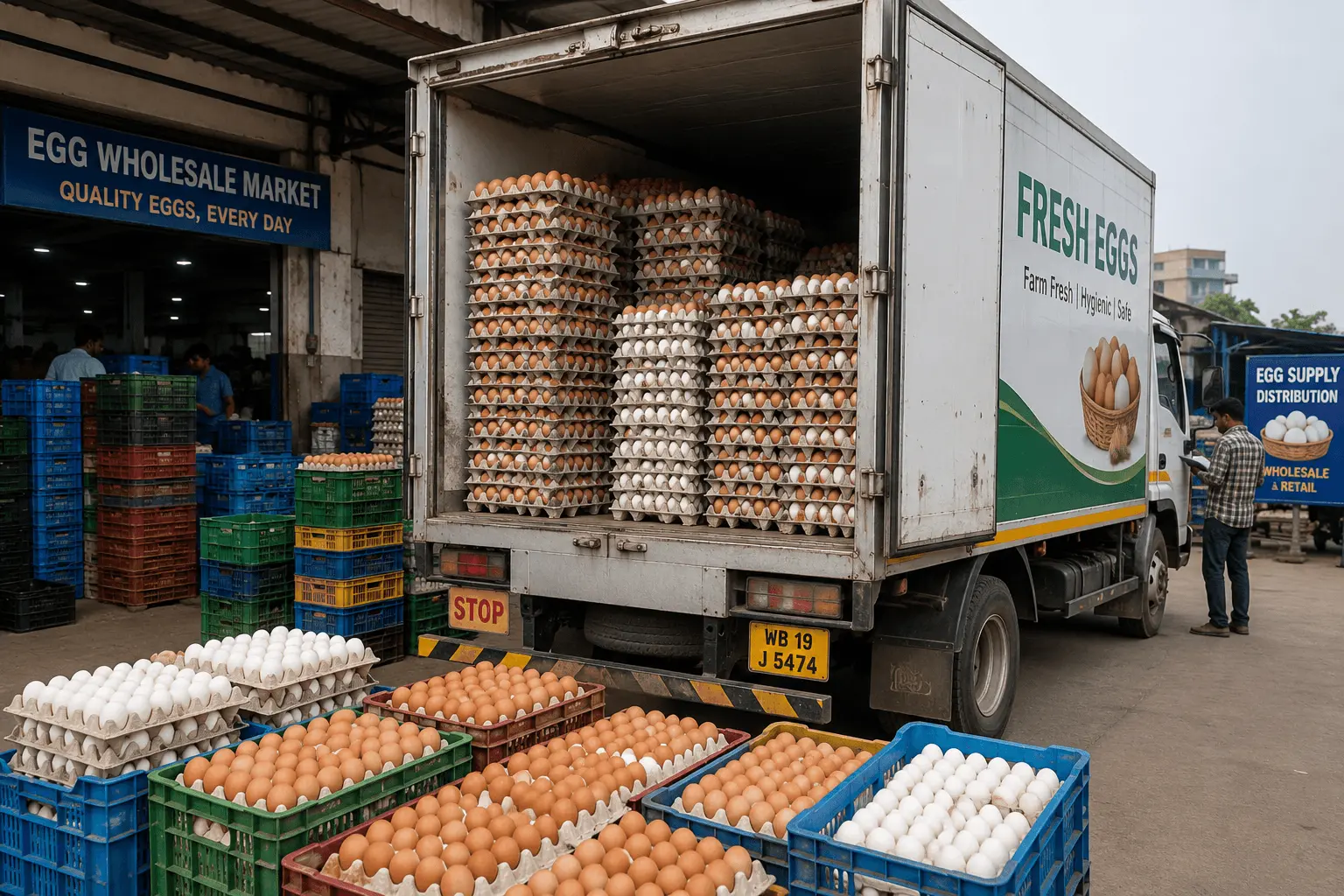
West Bengal’s egg market is not concentrated in one place. Production is spread across several districts, while consumption is driven by a mix of large urban centres and growing smaller cities. Understanding which areas produce and which areas consume is key to understanding how egg prices move across the state.
Major Egg Production Centres
West Bengal has a number of districts where commercial poultry farming is well established. These are the areas where layer farms operate at scale and supply eggs into the state’s wholesale network.
One important characteristic of West Bengal’s production base is that it cannot fully meet the state’s own consumption demand, particularly in peak seasons. When local farm output falls short, eggs are supplemented by supply from Andhra Pradesh, Telangana, and Odisha. Those longer supply routes carry higher transport costs, which feeds directly into the West Bengal egg rate on those days.
Major Consumption Markets
West Bengal’s egg demand is driven by several distinct market centres, each with its own buying patterns and price dynamics.
The combined demand from Kolkata, Howrah, and the state’s growing secondary cities is large enough that any tightening in local supply quickly pushes the West Bengal egg rate up, even when production conditions at farms appear normal.
West Bengal’s Poultry and Egg Industry
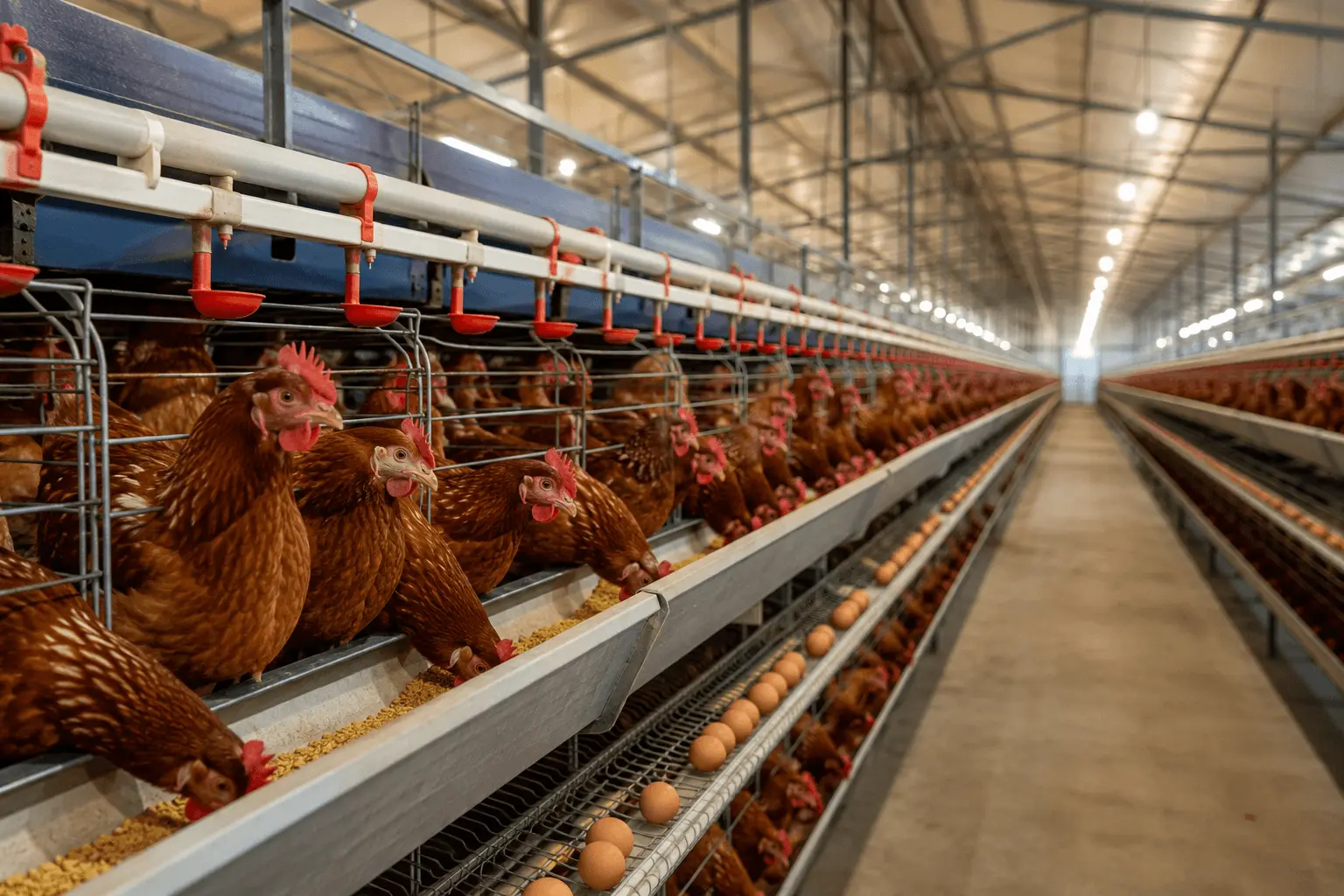
West Bengal’s poultry sector has grown considerably over the past two decades. What was once a fragmented network of small backyard farms has expanded into organised commercial layer farming across several districts, driven by rising urban demand and better access to feed, inputs, and markets.
One structural challenge for West Bengal’s poultry industry is feed cost. Maize and soybean meal, the primary inputs for layer farm feed, are not produced at scale in the state. West Bengal layer farms depend on feed sourced from other parts of India, which makes them sensitive to national commodity price movements in ways that farms in maize-producing states are not.
When maize or soybean prices rise nationally, West Bengal’s layer farmers feel it quickly. Higher feed costs either reduce flock sizes or get passed through to egg prices. Both outcomes push the West Bengal egg rate up within days of the feed price change.
What Influences Egg Prices in West Bengal?
Egg prices in West Bengal do not move without a reason. Each change in the daily rate connects back to something specific happening in the state’s supply chain, production base, or consumer market. These are the factors that matter most for West Bengal specifically.
• October to February: Peak season. Durga Puja, Kali Puja, Christmas, and Eid drive household and commercial demand to its highest levels. Cooler temperatures increase appetite for eggs generally. This is when today’s egg rate in West Bengal typically runs at its highest.
• March to June: Demand softens as temperatures rise. Prices ease during this window, often creating better buying conditions for businesses that can plan in advance.
• July to September: Monsoon season brings moderate demand recovery but frequent transport disruptions that can produce sudden price spikes despite average consumption levels.
Understanding these six factors makes it much easier to read West Bengal’s daily egg price movements. A sudden price spike is almost always traceable to one or more of these causes. The direction the rate has been moving over the past week tells you more about where it is likely to go next than the single day’s figure alone.
Explore Popular Cities Egg Rates
Explore egg rates from other major markets across India. Select a city below to view today’s egg prices, recent market trends, and historical rate information.
QUESTIONS